Breast Revision
Overview
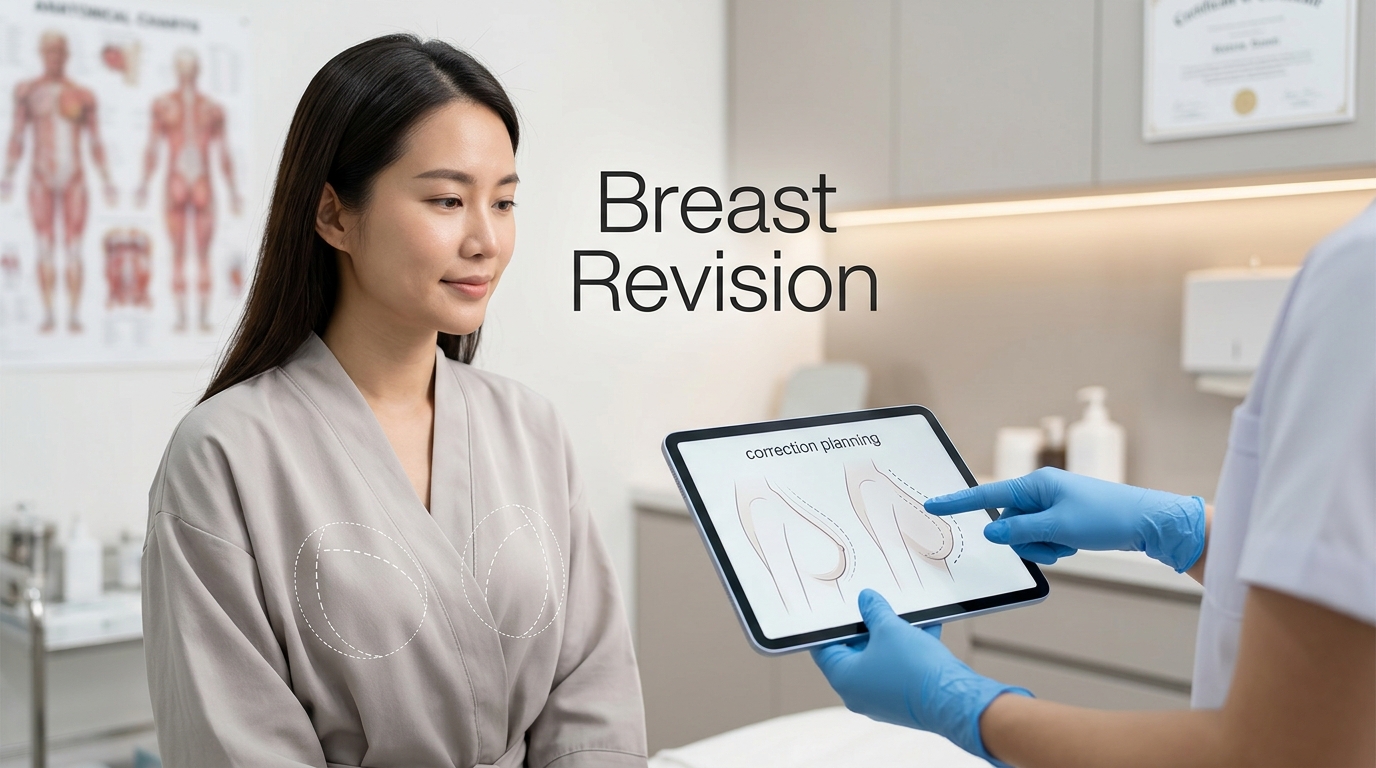
Breast revision surgery is a specialized procedure performed to address complications or aesthetic dissatisfaction following a primary breast augmentation. Unlike the initial surgery, a revision often involves navigating existing scar tissue and altered anatomy. It may include implant replacement, removal, or the correction of the breast pocket to resolve issues such as asymmetry or 'bottoming out.'
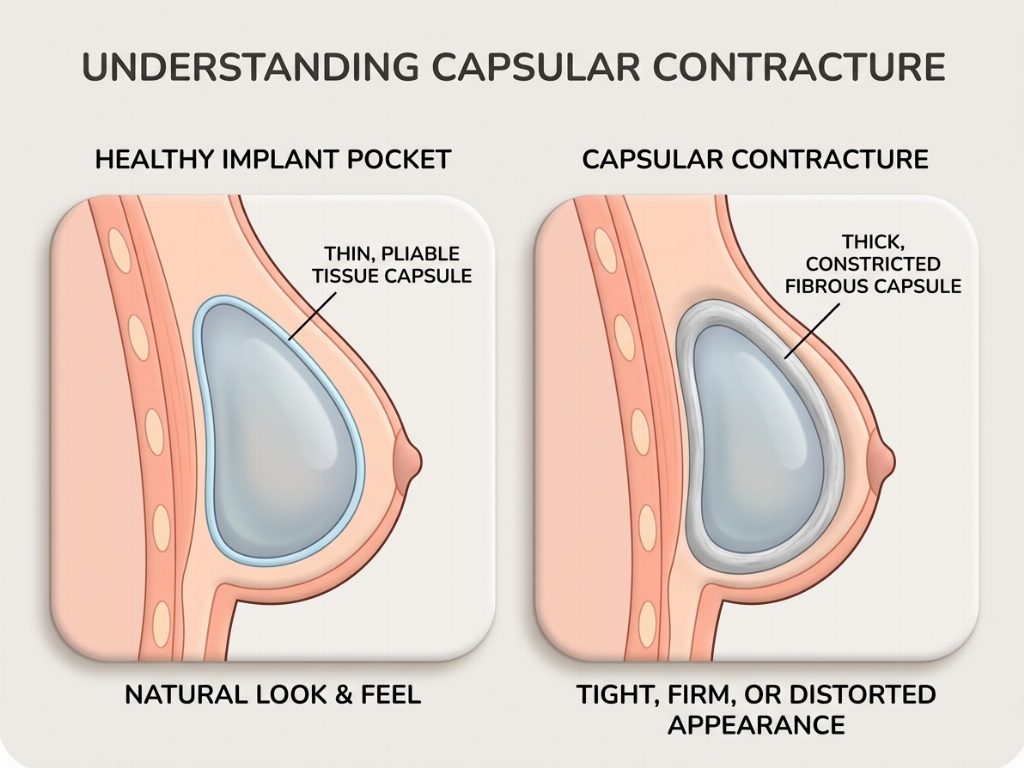
Common reasons for seeking a revision include capsular contracture (where the scar tissue around the implant hardens), implant rupture, or simply a desire to change the size or type of implant. Because the internal environment of the breast has been previously modified, this procedure requires a high level of surgical precision and a customized approach for every patient.
Expected Results
The primary goal of a breast revision is to restore a natural, comfortable, and aesthetically pleasing appearance to the breasts. Patients can expect an improvement in breast symmetry, a softer feel if contracture was present, and a more proportionate silhouette. While the surgery aims to resolve specific concerns, it is important to have realistic expectations, as previous scarring can influence the final contour.
Results are typically visible once the initial swelling subsides, though the final shape may take several months to settle. A successful revision not only addresses physical discomfort but also helps restore the patient's confidence in their surgical outcome.
Why Korea & Cost
South Korea is a global hub for complex secondary surgeries, with many board-certified surgeons specializing exclusively in breast reconstruction and revision. Korean clinics often utilize advanced diagnostic tools, such as high-resolution ultrasound and 3D imaging, to assess the condition of the existing implant and surrounding tissue before the first incision is made. This meticulous planning aims to address complex issues and reduce the likelihood of additional revisions.
The cost of breast revision in Korea varies significantly based on the complexity of the case, such as whether a full capsulectomy (removal of the scar capsule) is required or if new implants are being used. Factors including the surgeon's expertise and the specific clinic's facilities will influence the final quote, which is typically provided after a detailed physical consultation.
Recovery & Aftercare
Recovery from a revision surgery can be more intensive than the primary procedure. While the surgical pocket already exists, the removal of scar tissue or the management of a capsulectomy can often result in more post-operative discomfort or a longer healing period. Patients should expect some swelling, bruising, and temporary tightness in the chest area.
Following the surgeon's aftercare protocol is vital for a smooth recovery. This includes wearing specialized support garments and attending follow-up appointments to monitor the healing of internal tissues. Most patients can return to light desk work within a week, but strenuous upper-body exercise must be avoided for several weeks to prevent complications.
Who Is It For?
- Individuals experiencing capsular contracture or hardening
- Patients with ruptured or leaking silicone or saline implants
- Those dissatisfied with the size or shape of their current implants
- Patients with implant displacement or visible rippling
- Individuals seeking to remove implants permanently
Benefits
- Correction of painful or uncomfortable scar tissue
- Improved breast symmetry and natural positioning
- Opportunity to upgrade to newer implant technologies
- Resolution of implant-related complications
- Enhanced aesthetic confidence and physical comfort
How It's Done
- Pre-operative ultrasound or imaging to assess current implants
- Administration of general anesthesia for patient comfort
- Incision through previous scars to minimize new marking
- Removal or replacement of implants and scar tissue (capsulectomy)
- Reshaping of the breast pocket and internal suturing
- Closure of incisions and application of surgical dressings
Risks & Side Effects
- Seroma or hematoma (fluid or blood accumulation)
- Increased risk of infection in secondary surgery
- Changes in nipple or breast sensation
- Recurrence of capsular contracture
- Delayed wound healing or visible scarring
Recovery
- Initial recovery typically spans 5 to 14 days
- A surgical bra is typically worn 24/7 for the first month, as directed by your surgeon
- Expect moderate swelling and bruising for the first 2 weeks
- Prescribed pain medication helps manage post-operative discomfort
- Strenuous lifting and exercise are restricted for 4 to 6 weeks
Aftercare
- Keep incision sites clean and dry as instructed
- Attend all scheduled follow-up ultrasounds and check-ups
- Avoid sleeping on your stomach or side during early recovery
- Massage the breasts only if specifically recommended by your surgeon
- Monitor for signs of excessive swelling or fever
Precautions
- Disclose all details of your previous breast surgeries
- Stop smoking and avoid blood-thinning medications before surgery
- Ensure a support person is available for the first 24-48 hours
- Avoid submerging incisions in baths or pools until fully healed
- Report any sudden unilateral swelling to your clinic immediately
| Duration | 30-90 min |
|---|---|
| Recovery | 5-14 days |
| Anesthesia | General anesthesia |
| Price Range | Consultation required |





 Clinic Introduction
 Medical Facility
 Patient Care
 Consultation Room
 Medical Staff
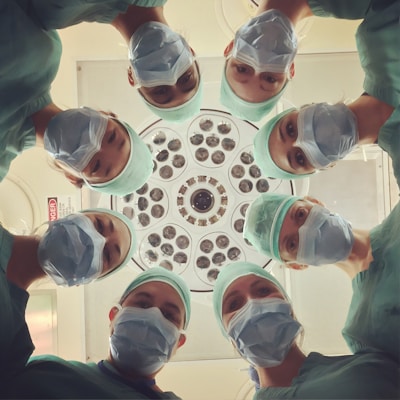 Recovery Suite
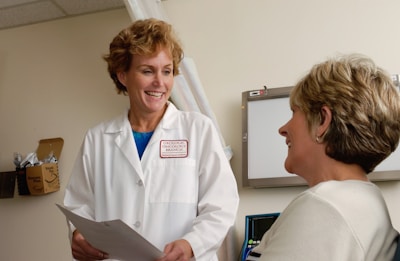 Treatment Room