Cataract Surgery
Overview
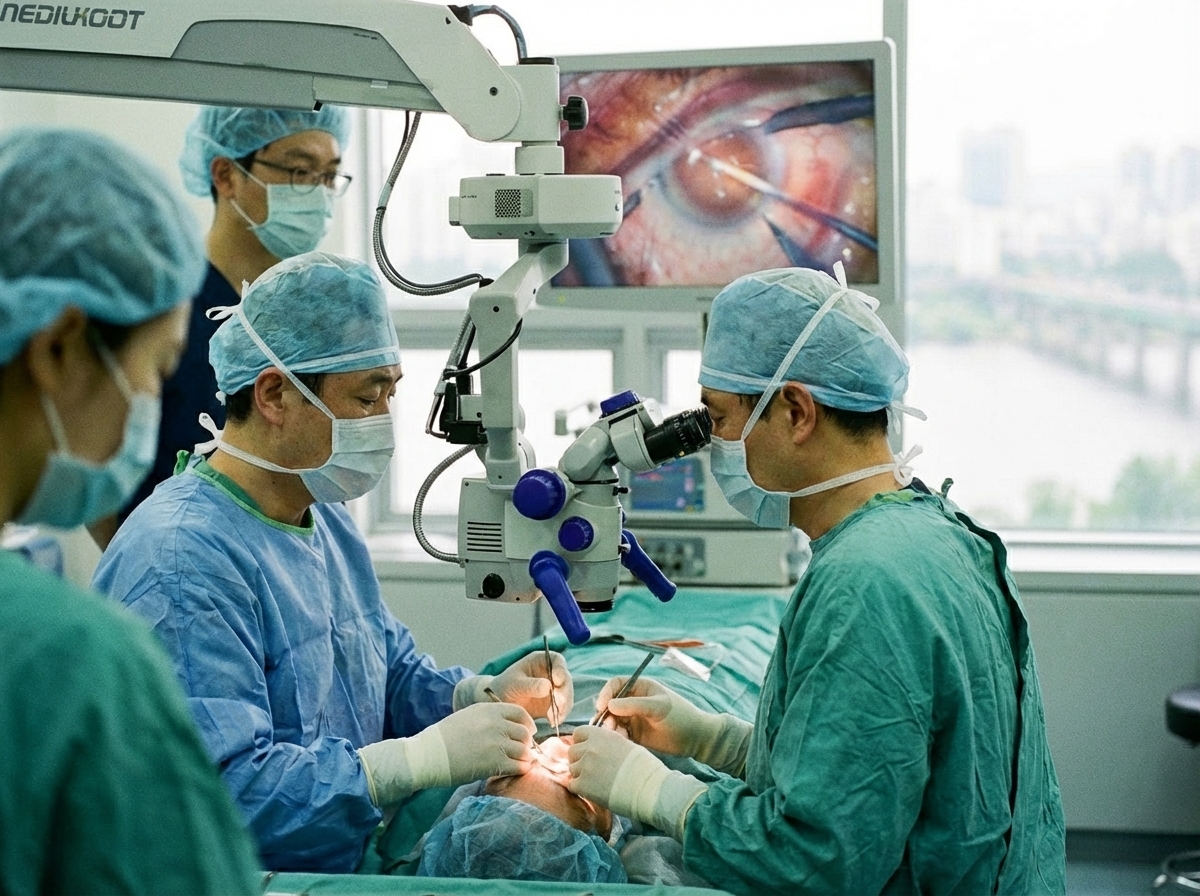
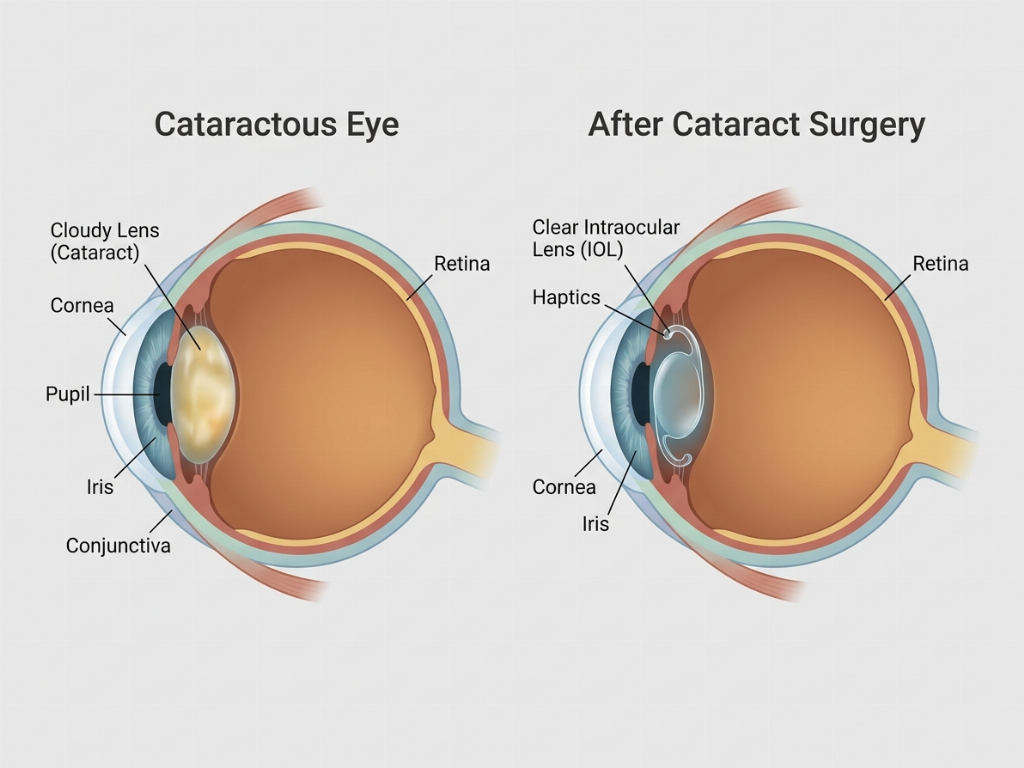
Cataract surgery is a common ophthalmological procedure designed to treat the clouding of the eye's natural lens, a condition known as a cataract. This clouding prevents light from focusing clearly on the retina, leading to blurred vision, glare, and difficulty seeing in low-light conditions. During the procedure, a surgeon uses advanced microsurgical techniques to remove the opaque lens and replace it with a clear, biocompatible Intraocular Lens (IOL).
Modern cataract surgery typically utilizes phacoemulsification, where ultrasound energy gently breaks up the cloudy lens for removal through a microscopic incision. This 'cold' laser or ultrasound approach allows for rapid healing and often eliminates the need for traditional stitches. Patients can choose from various IOL types, including monofocal, multifocal, or toric lenses, depending on their specific visual needs and lifestyle.
Expected Results
The primary goal of cataract surgery is the restoration of visual clarity. Most patients notice a significant improvement in brightness, color perception, and sharpness within a few days of the procedure. While the artificial lens is permanent and cannot develop a new cataract, the final visual outcome depends on the health of the underlying retina and the type of IOL selected during consultation.
While many patients achieve excellent distance vision, those opting for monofocal lenses may still require reading glasses for close-up tasks. Multifocal or 'premium' IOLs are designed to provide a broader range of focus, potentially reducing overall dependence on eyewear. It is important to have realistic expectations, as the eye needs time to stabilize and adjust to the new lens.

Why Korea & Cost
South Korea is well-regarded for its advanced ophthalmology centers, which are equipped with the latest diagnostic and surgical platforms, such as femtosecond laser-assisted cataract surgery (FLACS). Korean eye clinics often cater to international patients by providing comprehensive English-language support and streamlined scheduling that allows for consultation, surgery, and initial follow-up within a short timeframe.
The cost of cataract surgery in Korea is influenced by several factors, including the complexity of the case, the specific surgical technology used, and most significantly, the choice of Intraocular Lens (IOL). Premium multifocal or toric lenses carry a higher price point than standard monofocal lenses. A detailed pre-operative examination is necessary to provide an accurate quote based on the patient's ocular health and lens preference.
Recovery & Aftercare
Recovery from cataract surgery is generally swift, with most patients returning to light daily activities within 24 to 48 hours. It is normal to experience mild grittiness, itching, or slight discharge immediately following the procedure, but these symptoms typically subside quickly. Protecting the eye from pressure and contaminants is the most critical aspect of the early healing phase.
Patients are prescribed a regimen of antibiotic and anti-inflammatory eye drops to prevent infection and manage swelling. Adhering strictly to this schedule is vital for a successful outcome. While vision may fluctuate slightly in the first week, significant stabilization usually occurs within one month, at which point a final prescription for glasses (if needed) can be determined.
Who Is It For?
- Individuals with blurred or cloudy vision that interferes with daily tasks
- Those experiencing significant glare or halos around lights at night
- Patients with cataracts confirmed by a comprehensive eye exam
- Individuals with realistic expectations regarding post-operative vision
- Those in stable general health capable of undergoing a short procedure
Benefits
- Significant improvement in visual clarity and brightness
- Enhanced color perception and contrast sensitivity
- Reduced dependence on corrective eyewear with premium IOLs
- Quick procedure time with minimal physical downtime
- Permanent solution for lens clouding
How It's Done
- Application of numbing drops or local anesthesia to the eye
- Creation of a microscopic incision in the cornea
- Use of ultrasound (phacoemulsification) to break up the cloudy lens
- Suctioning of the lens fragments from the eye capsule
- Insertion and positioning of the foldable intraocular lens (IOL)
- Verification of the self-sealing incision without the need for stitches
Risks & Side Effects
- Risk of infection or severe inflammation (endophthalmitis)
- Retinal detachment or increased intraocular pressure
- Corneal swelling (edema) or macular edema (CME)
- Secondary cataract (posterior capsule opacification)
- Dislocation or malposition of the intraocular lens
Recovery
- Vision may be blurry for the first 24 hours as the pupil recovers
- Mild scratchiness or 'foreign body' sensation is common initially
- Most patients can resume reading and watching TV within a day
- Full stabilization of vision typically takes 4 to 6 weeks
- Follow-up appointments are required to monitor healing and pressure
Aftercare
- Administer prescribed antibiotic and steroid eye drops exactly as directed
- Wear a protective eye shield while sleeping for the first week
- Avoid rubbing or applying any pressure to the treated eye
- Clean the eyelid area gently with sterile wipes if discharge occurs
- Wear sunglasses outdoors to protect the eye from bright light and dust
Precautions
- Avoid heavy lifting or strenuous exercise for at least two weeks
- Do not submerge the eye in water (pools, hot tubs, or baths) for 2 weeks
- Keep soap and shampoo out of the eye when washing your face or hair
- Avoid dusty environments or activities that could lead to eye trauma
- Contact the clinic immediately if you experience sudden pain or vision loss
| Duration | 20-40 min |
|---|---|
| Recovery | 1-7 days |
| Anesthesia | Local anesthesia |
| Price Range | approx. $370 – $1,480 (based on ₩500,000–₩2,000,000) |







 Clinic Introduction
 Medical Facility
 Patient Care
 Consultation Room
 Medical Staff
 Recovery Suite
 Treatment Room