Korean Medicine Diet

Overview
Korean Medicine Diet (Hanbang Diet) is a holistic weight management system rooted in traditional Korean medicine. Unlike standard calorie-counting diets, it focuses on identifying an individual's specific body constitution (Sasang) to address the root causes of weight gain, such as slow metabolism, poor circulation, or excessive internal heat.
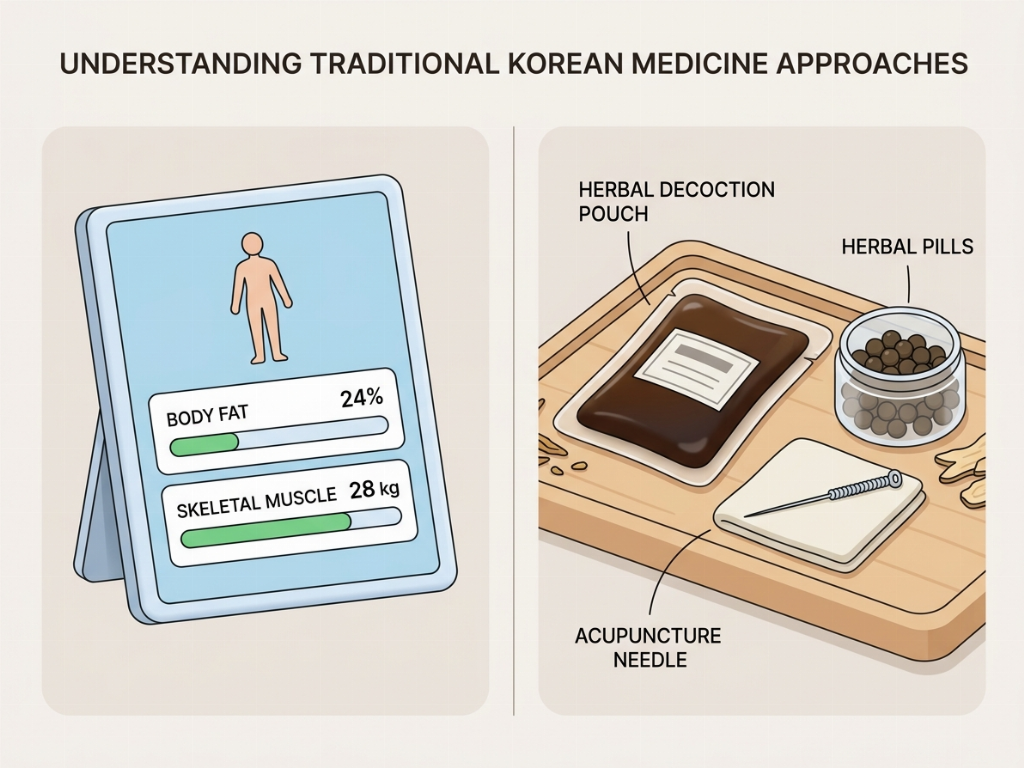
The core of the treatment involves custom-prescribed herbal medicine (Hanyak), often in the form of decoctions, pills, or concentrated granules. These formulas are designed to naturally suppress appetite, boost metabolic rate, and detoxify the body. This is frequently paired with pharmacopuncture or localized fat-dissolving acupuncture to target stubborn areas like the abdomen or thighs.
Expected Results
Patients can expect a gradual and sustainable reduction in body fat rather than just water weight. Because the treatment aims to balance the body's internal environment, many patients report secondary benefits such as improved digestion, reduced bloating, and increased energy levels. The herbal prescriptions work to minimize the 'yo-yo effect' by stabilizing the metabolic rate during the weight loss phase.
Visible changes typically include a slimmer waistline and more defined body contours. While results vary based on adherence to the program and individual physiology, the goal is a healthier body composition where fat is reduced while muscle mass is preserved through metabolic support.

Why Korea & Cost
South Korea is the global leader in integrating traditional Eastern medicine with modern diagnostic technology. Korean clinics use advanced body composition analyzers and digital pulse diagnostic tools to ensure herbal prescriptions are precise and safe. Many clinics specialize in 'Diet Hanbang,' offering convenient formulations like easy-to-swallow 'slim pills' or concentrated jellies tailored for international travelers.
The cost of a Korean Medicine Diet program depends on the duration of the herbal prescription (usually 2 to 4 weeks per cycle), the inclusion of specialized acupuncture sessions, and the complexity of the patient's metabolic needs. A consultation with a licensed Korean Medicine doctor is necessary to receive an accurate quote and a personalized treatment plan.
Recovery & Aftercare
There is virtually no downtime associated with this procedure. Acupuncture sessions may leave minor, temporary bruising or a dull sensation at the needle sites, which typically resolves within a few days. The primary 'recovery' involves the body adjusting to the herbal medicine, which may initially cause a slight increase in heart rate or thirst as the metabolism accelerates.
Long-term success relies on following the prescribed dosage and the dietary guidelines provided by the doctor. Aftercare often includes periodic check-ins to adjust the herbal formula as the patient's weight and constitution change during the program.
Who Is It For?
- Individuals struggling with stubborn fat despite diet and exercise
- Those seeking a natural appetite suppressant without harsh chemicals
- People with slow metabolism or frequent digestive bloating
- Patients looking for a holistic approach to weight loss and wellness
- Individuals interested in personalized medicine based on body constitution
Benefits
- Customized herbal formulas tailored to your specific body type
- Natural appetite suppression and metabolic enhancement
- Targets visceral fat and improves internal circulation
- Minimal side effects compared to synthetic weight-loss drugs
- Holistic improvement in skin condition and energy levels
How It's Done
- In-depth consultation and Sasang constitution analysis
- Body composition testing (InBody) and pulse diagnosis
- Customized herbal prescription formulation
- Localized acupuncture or pharmacopuncture for fat breakdown
- Nutritional counseling and lifestyle modification guidance
Risks & Side Effects
- Mild insomnia or heart palpitations from metabolic stimulation
- Temporary dry mouth or increased thirst
- Minor bruising or swelling at acupuncture sites
- Potential for herbal-drug interactions if not disclosed
- Digestive sensitivity to specific herbal ingredients
Recovery
- No downtime; return to daily activities immediately
- Acupuncture site tenderness usually fades within 24-48 hours
- Metabolic adjustment period typically lasts 3-5 days
- Increased water intake is required to support detoxification
- Regular monitoring of heart rate and sleep patterns
Aftercare
- Take herbal medicine at the exact times prescribed by the doctor
- Maintain high hydration levels to assist metabolic waste removal
- Follow the specific 'forbidden foods' list provided by the clinic
- Engage in light aerobic exercise to maximize herbal efficacy
- Report any unusual heart palpitations or sleep disturbances to the clinic
Precautions
- Disclose all current medications and supplements to the doctor
- Avoid caffeine if the herbal formula causes sensitivity
- Not recommended for pregnant or breastfeeding women
- Ensure the clinic is a licensed Korean Medicine facility
- Consistency is key; do not skip doses of the herbal medicine
| Duration | 30-90 min |
|---|---|
| Recovery | 0-3 days |
| Anesthesia | No anesthesia |
| Price Range | approx. $70 – $370 (based on ₩100,000–₩500,000) |




 Clinic Introduction
 Medical Facility
 Patient Care
 Consultation Room
 Medical Staff
 Recovery Suite
 Treatment Room