Lateral Canthoplasty
Overview
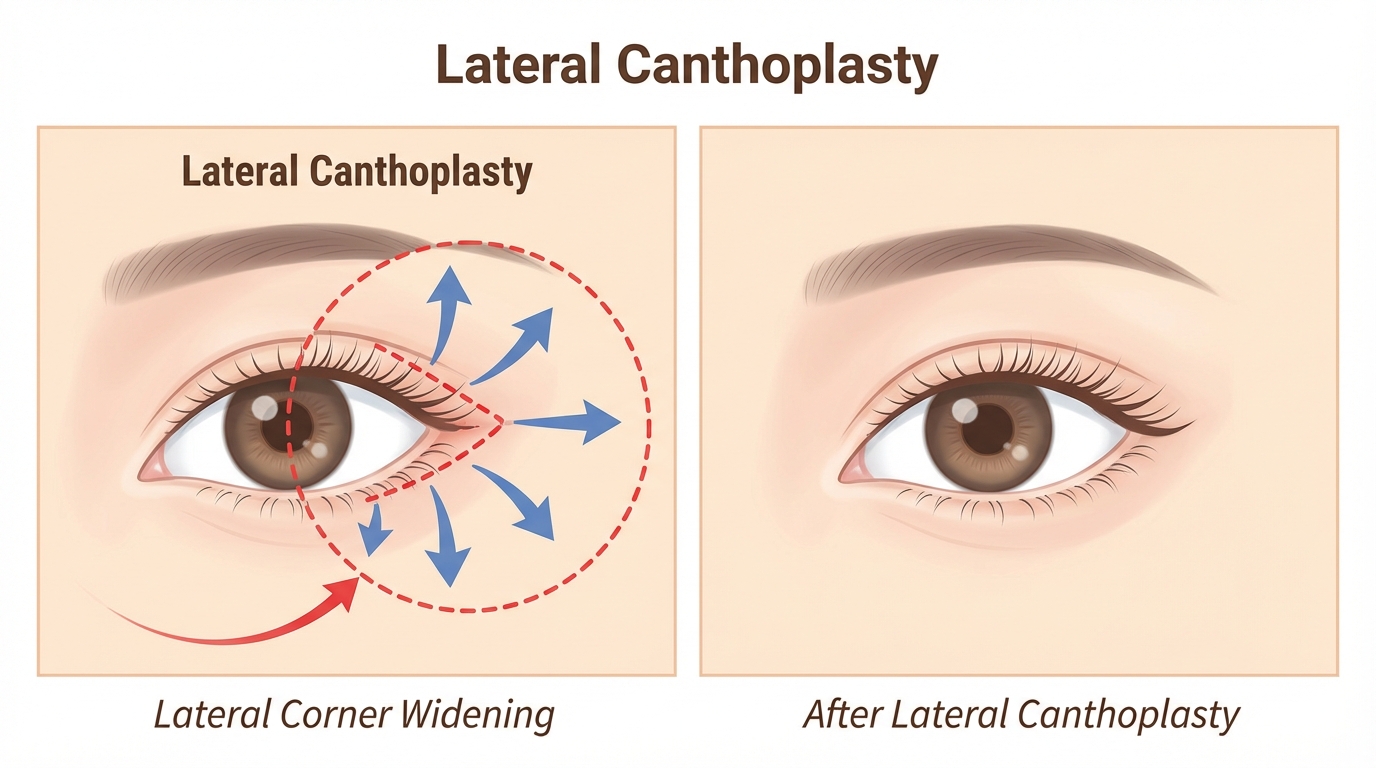
Lateral canthoplasty is a specialized surgical procedure designed to modify the lateral canthus, which is the outer corner where the upper and lower eyelids meet. Unlike double eyelid surgery which focuses on the crease, this procedure aims to extend the horizontal width of the eye or adjust the angle of the outer corner. It is often sought by individuals who feel their eyes appear too narrow, short, or excessively slanted upward.
The surgery involves making a precise incision at the outer corner to reposition the lateral canthal tendon. By carefully anchoring this tendon to the orbital bone, a surgeon can lengthen the eye or lower a high-set outer corner. Because the area involves delicate tear duct structures and eyelid function, it requires a deep understanding of ocular anatomy to ensure both aesthetic improvement and functional integrity.
Expected Results
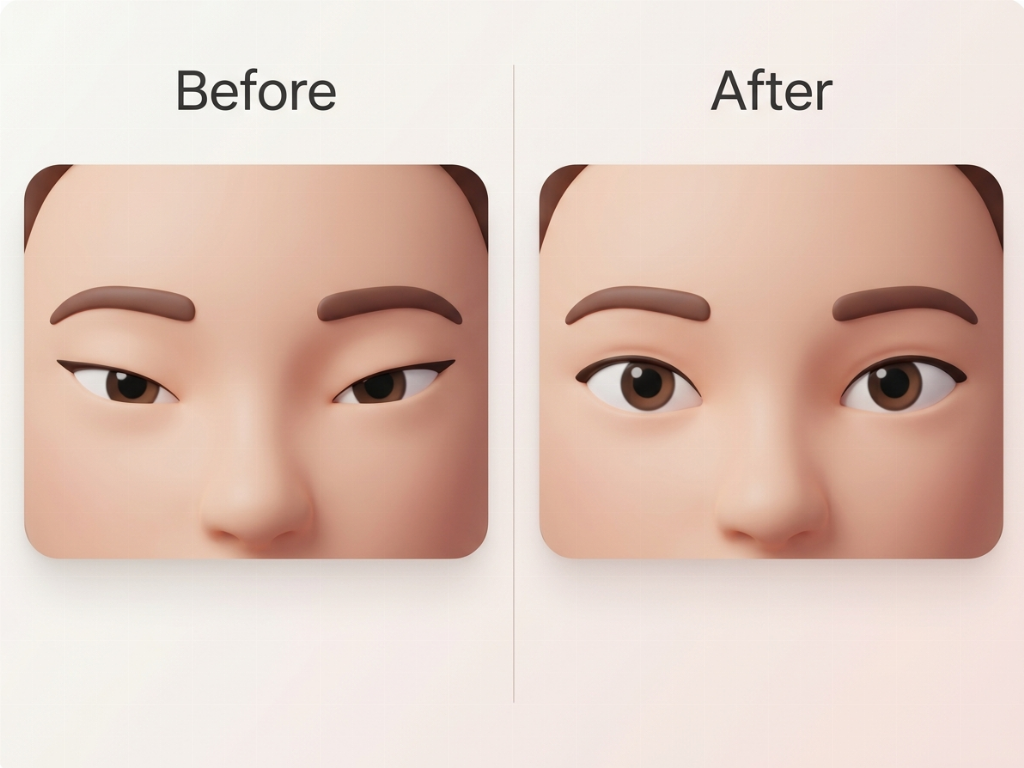
The primary goal of lateral canthoplasty is to create a more elongated and open eye shape. Patients typically notice that the eyes appear larger and more balanced in proportion to the rest of the face. If the procedure was performed to correct a sharp upward slant (often called a 'phoenix eye'), the result is a softer, more approachable expression.
Results are generally stable over time, though it is important to remember that the skin and tissues around the eyes will continue to age naturally. While the structural changes to the tendon are intended to be long-term, factors like skin elasticity and lifestyle can influence the appearance of the eye area in the years following surgery.
Why Korea & Cost
South Korea is a major hub for oculoplastic surgery, with surgeons who perform a high volume of canthoplasty procedures specifically tailored to Asian eye anatomy. Korean clinics often utilize advanced techniques, such as the 'hidden incision' method, which aims to minimize visible scarring by placing sutures within the natural folds of the outer eye. Many facilities also provide comprehensive English-language support and dedicated post-operative deswelling treatments.
The cost of lateral canthoplasty in Korea varies based on several factors, including the complexity of the case, whether it is a primary or revision surgery, and if it is being combined with other procedures like ptosis repair or blepharoplasty. A formal consultation with a board-certified specialist is necessary to receive an accurate quote based on your specific anatomical needs.
Recovery & Aftercare
The initial recovery period for lateral canthoplasty usually lasts about one to two weeks. During the first few days, patients should expect swelling, bruising, and a sensation of tightness around the outer corners. Some temporary redness in the whites of the eyes (chemosis) or mild tearing is common as the tissues heal. Sutures are typically removed 5 to 7 days after the procedure.
Adhering to aftercare instructions is vital for preventing complications and ensuring the best possible scar maturation. This includes keeping the head elevated while sleeping, using prescribed eye drops to prevent dryness, and avoiding any activities that might strain the eyes or increase ocular pressure. Most patients can return to non-strenuous work within a week, though full tissue settling may take several months.
Who Is It For?
- Individuals with horizontally short or narrow eyes
- Those with an excessively sharp upward slant at the outer corners
- Patients seeking a more open or softer eye expression
- Individuals with realistic expectations for surgical outcomes
- Non-smokers in good general health without severe dry eye
Benefits
- Increases the horizontal length of the eye opening
- Can soften a harsh or overly slanted eye appearance
- Helps balance facial proportions for those with wide temples
- Often performed alongside other eyelid surgeries for a synergistic effect
- Utilizes discreet incisions to minimize visible scarring
How It's Done
- Administration of local anesthesia with sedation
- Precise incision made at the outer corner of the eye
- Dissection and release of the lateral canthal tendon
- Repositioning and anchoring the tendon to the orbital rim
- Fine suturing of the skin to close the incision
Risks & Side Effects
- Rounding of the lateral canthus or loss of the natural sharp angle
- Incomplete closure of the eyelids (lagophthalmos)
- Temporary or persistent dry eye syndrome
- Visible scarring or webbing at the outer corner
- Asymmetry between the left and right eyes
Recovery
- Sutures are typically removed 5 to 7 days post-surgery
- Swelling and bruising peak within the first 48 to 72 hours
- Avoid wearing contact lenses for at least 2 weeks
- Most patients return to daily activities after 7 to 10 days
- Final results emerge as internal tissues settle over 3 to 6 months
Aftercare
- Apply cold compresses for the first 3 days to reduce swelling
- Use prescribed antibiotic ointments and lubricating eye drops
- Keep the head elevated above the heart when resting
- Avoid rubbing or applying pressure to the outer corners
- Refrain from heavy exercise and sauna use for 4 weeks
Precautions
- Disclose any history of dry eye or glaucoma to the surgeon
- Stop taking blood-thinning supplements 2 weeks before surgery
- Avoid eye makeup until the incisions are fully closed and healed
- Protect the eye area from direct sunlight with sunglasses
- Attend all scheduled follow-up appointments for monitoring
| Duration | 30-45 min |
|---|---|
| Recovery | 5-10 days |
| Anesthesia | Sedation |
| Price Range | approx. $370 – $1,110 (based on ₩500,000–₩1,500,000) |








 Clinic Introduction
 Medical Facility
 Patient Care
 Consultation Room
 Medical Staff
 Recovery Suite
 Treatment Room