Picosecond Laser Treatment
Overview
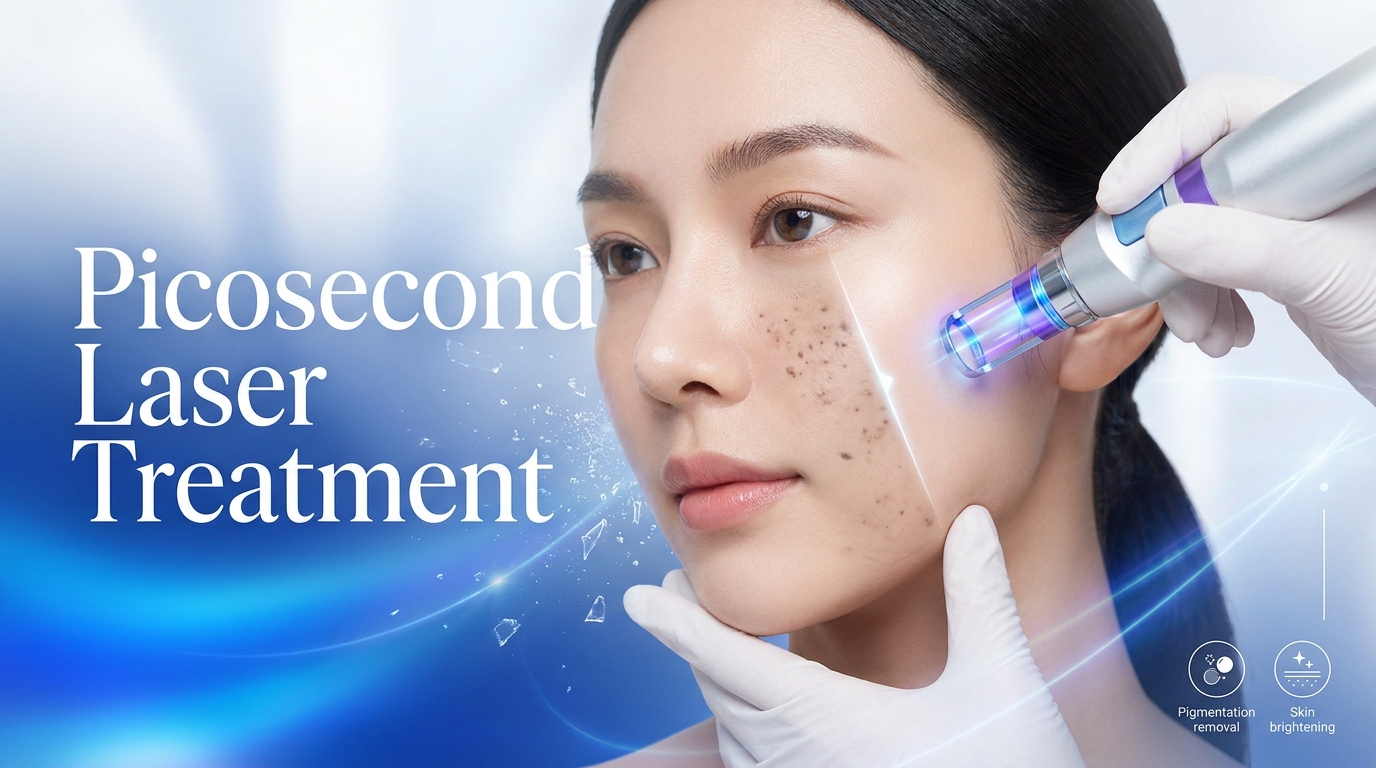
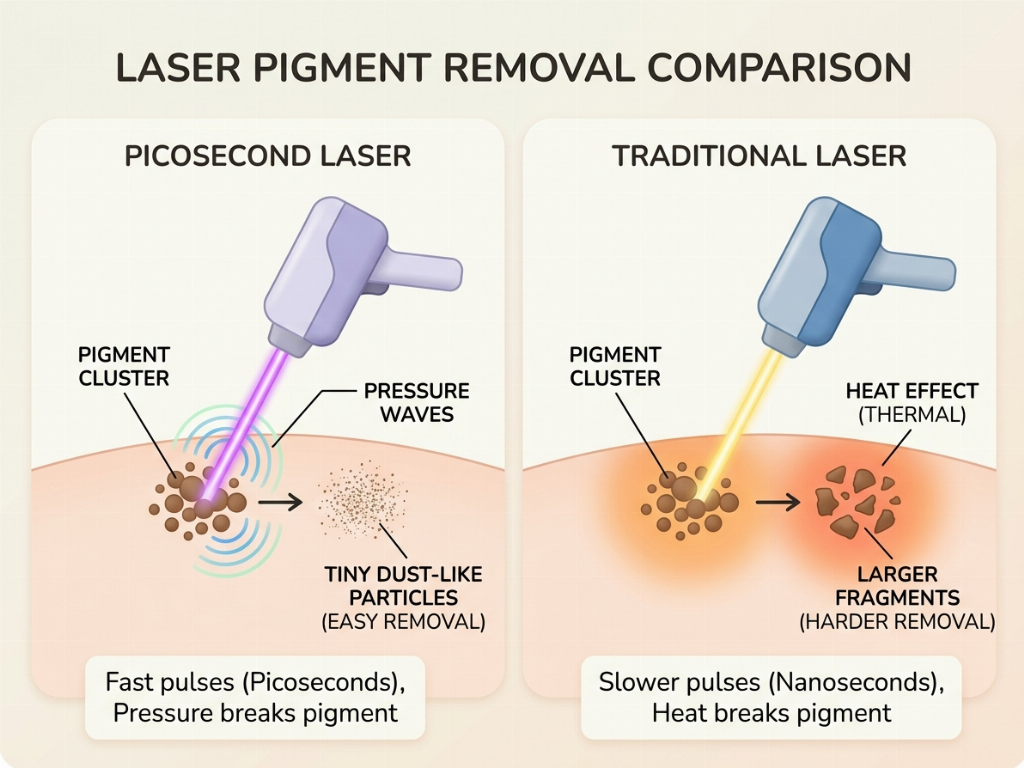
Picosecond laser technology represents a significant leap in dermatological science, delivering energy in trillionths of a second (picoseconds). Unlike traditional lasers that rely on photothermal (heat) energy to burn away imperfections, picosecond lasers use a photoacoustic effect. This creates rapid pressure waves that shatter targeted pigment into tiny, dust-like particles that the body can easily eliminate.
Because the pulses are so incredibly fast, there is significantly less heat transfer to the surrounding skin. This makes the procedure safer for a wider range of skin tones and reduces the risk of post-inflammatory hyperpigmentation. It is primarily used for treating stubborn melasma, freckles, sun spots, acne scars, and tattoo removal.
Expected Results
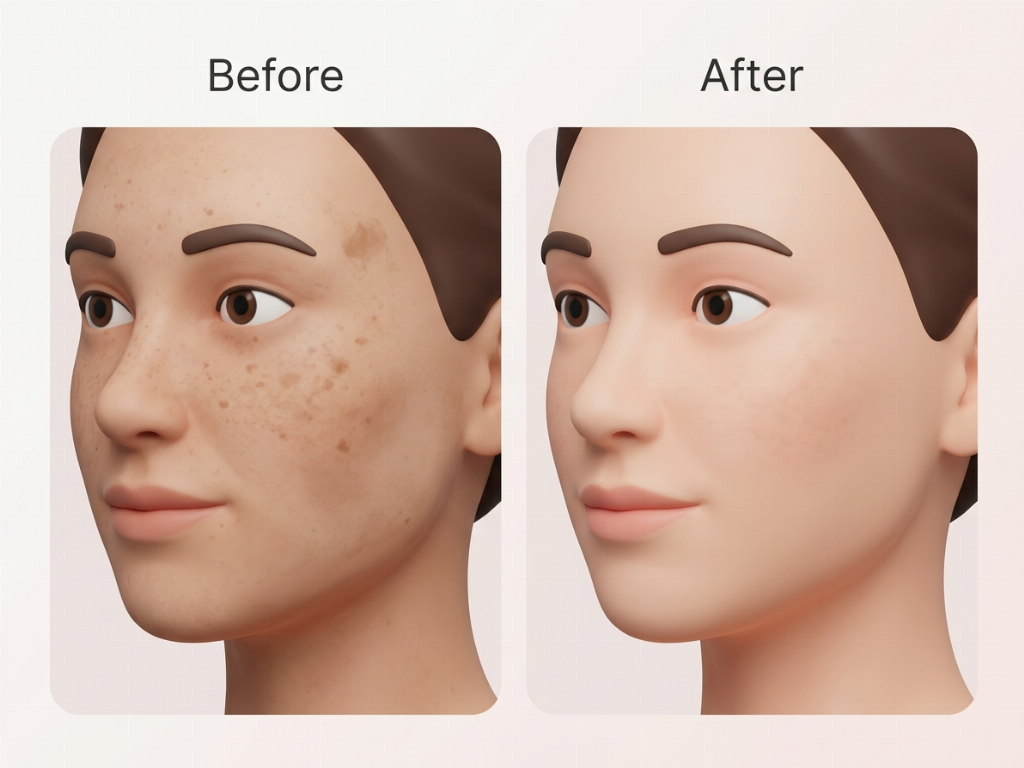
Patients can expect a visible reduction in skin discoloration and an overall improvement in skin texture. For pigmentation issues like sun spots or freckles, the spots may initially darken before flaking off or fading over the following weeks. Because the laser also creates micro-vacuoles in the dermis, it triggers a natural healing response that boosts collagen and elastin production.
While some improvement is often seen after a single session, a series of 3 to 5 treatments is typically recommended for optimal results, especially for deep-seated pigment or scarring. The result is a clearer, more even-toned complexion with a refined 'glow' that looks natural rather than 'done'.
Why Korea & Cost
South Korea is a global leader in laser dermatology, often being the first to adopt and refine the latest picosecond platforms. Korean dermatologists are renowned for their customized 'cocktail' protocols, where they may combine different laser wavelengths and settings in a single session to address multiple skin layers simultaneously. This precision is particularly beneficial for Asian skin types, which are more prone to pigmentation issues.
The cost of picosecond laser treatment in Korea is influenced by the specific device used (such as PicoSure, PicoWay, or Discovery Pico), the size of the treatment area, and the expertise of the board-certified dermatologist. A consultation is essential to determine the number of passes required and to receive an accurate quote based on your specific skin concerns.
Recovery & Aftercare
One of the primary advantages of picosecond technology is the minimal downtime. Most patients experience mild redness and slight swelling similar to a light sunburn, which typically subsides within a few hours to 24 hours. Unlike older ablative lasers, the surface of the skin remains intact, allowing patients to apply makeup and return to their daily routine almost immediately.
Post-treatment care focuses on protection and hydration. The skin will be temporarily more sensitive to UV rays, making strict sun protection mandatory to prevent new pigment from forming. Using gentle, non-irritating skincare products for the first few days will help support the skin's recovery process.
Who Is It For?
- Individuals with stubborn melasma or sun-damaged skin
- Those looking to fade acne scars or large pores
- Patients seeking tattoo removal with fewer sessions
- People with darker skin tones who need a safer laser option
- Anyone wanting skin rejuvenation with minimal downtime
Benefits
- Faster results for pigmentation compared to nanosecond lasers
- Reduced risk of heat-related side effects or burns
- Minimal downtime with most redness fading in hours
- Stimulates collagen for improved skin texture and elasticity
- Effective on a wide range of ink colors for tattoo removal
How It's Done
- Deep cleansing of the treatment area to remove oils and makeup
- Application of topical numbing cream if requested for comfort
- Eye protection shields are placed over the patient's eyes
- The laser handpiece is passed over the skin in targeted areas
- Application of a cooling mask or soothing serum post-laser
Risks & Side Effects
- Temporary redness and mild swelling
- Transient hyperpigmentation or hypopigmentation
- Mild itching or skin sensitivity during healing
- Incomplete pigment removal requiring multiple sessions
Recovery
- Redness typically lasts between 1 to 4 hours
- No scabbing or peeling is expected for standard rejuvenation
- Treated pigment may darken slightly before fading
- Most patients return to work the same or next day
- Full results appear gradually over 2 to 4 weeks
Aftercare
- Apply broad-spectrum SPF 30 or higher daily
- Avoid direct sun exposure for at least two weeks
- Use a gentle moisturizer to keep the skin hydrated
- Avoid harsh exfoliants or retinoids for 5-7 days
- Do not use saunas or hot tubs for 48 hours
Precautions
- Discontinue use of photosensitizing medications before treatment
- Inform the doctor of any history of cold sores
- Avoid tanning or sunbeds for 4 weeks prior to the session
- Wait at least 2 weeks after other aggressive facial treatments
- Consult a doctor if you have active skin infections or rashes
| Duration | 15-30 min |
|---|---|
| Recovery | 0-1 days |
| Anesthesia | Topical anesthesia |
| Price Range | approx. $60 – $220 (based on ₩80,000–₩300,000) |




 Clinic Introduction
 Medical Facility
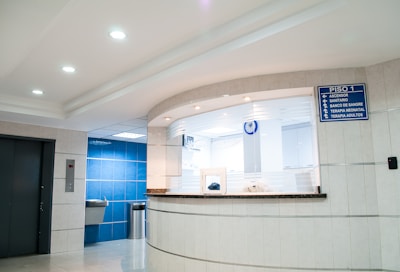 Patient Care
 Consultation Room
 Medical Staff
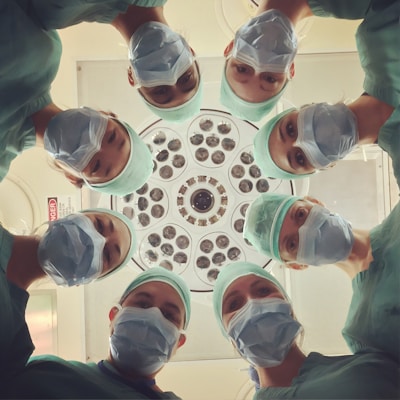 Recovery Suite
 Treatment Room