Presbyopia Surgery
Overview
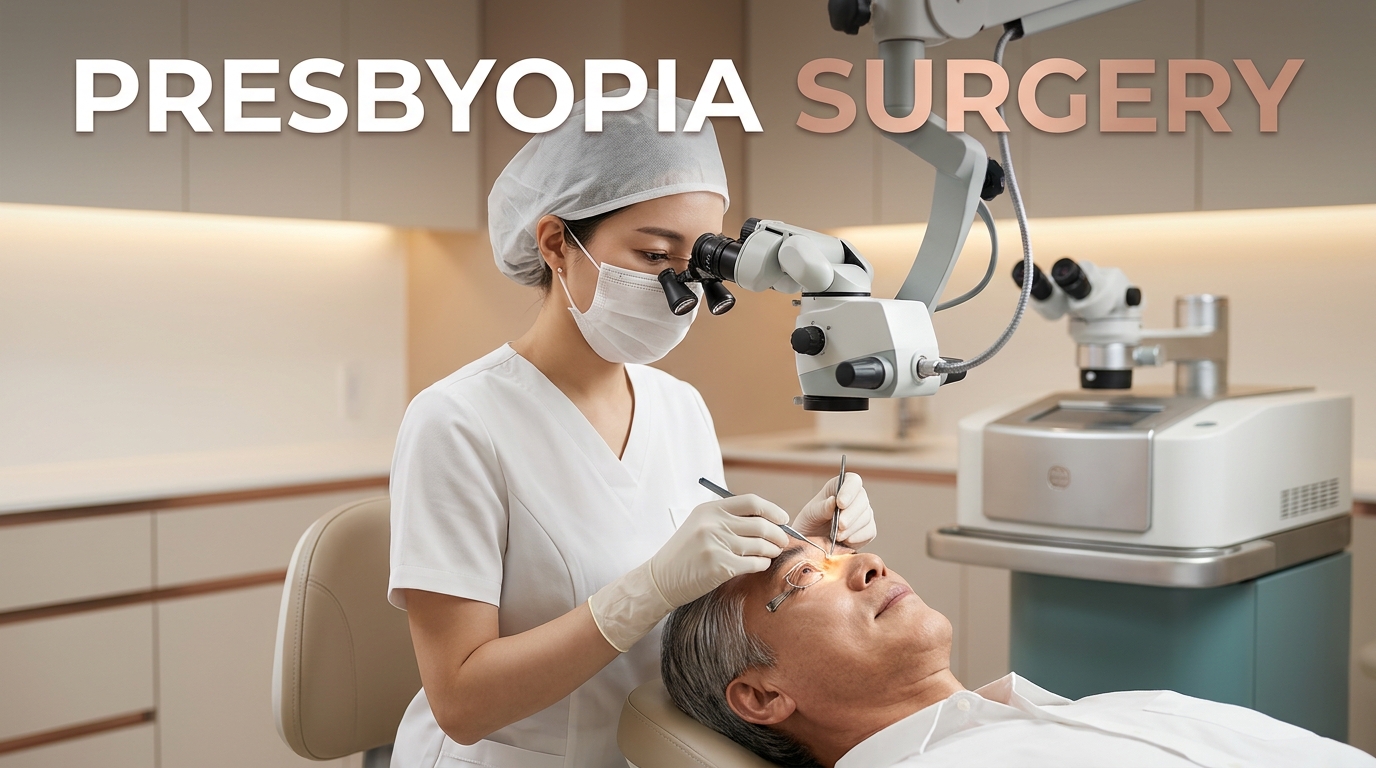
Presbyopia is the age-related loss of the eye's ability to focus on nearby objects, typically occurring after age 40. In South Korea, presbyopia surgery primarily involves two main approaches: Refractive Lens Exchange (RLE) and Laser Vision Correction (such as Presbyond or Monovision LASIK).
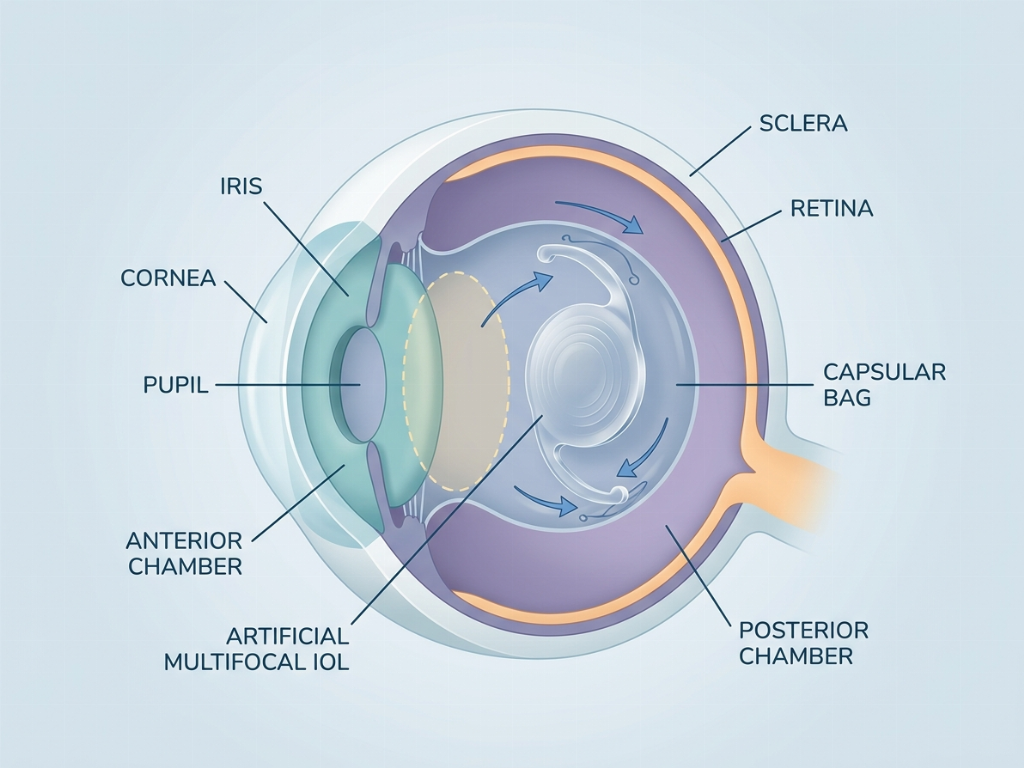
RLE is the most common surgical choice for long-term correction. It involves removing the eye's natural, hardened lens and replacing it with an advanced Multifocal Intraocular Lens (IOL). These high-tech lenses have multiple focal points, allowing the eye to see clearly at near, intermediate, and far distances without the constant need for reading glasses or bifocals.
Expected Results
The primary goal of presbyopia surgery is to reduce or eliminate dependency on corrective eyewear for daily tasks like reading, using a smartphone, or driving. Most patients experience a significant improvement in their range of vision within a few days of the procedure. While the artificial lens (IOL) used in RLE is permanent and cannot develop a cataract, it is important to understand that the eye's other structures continue to age naturally.
While the visual outcome is generally stable, patients should maintain regular eye exams. The surgery does not prevent other age-related conditions such as glaucoma or macular degeneration, which can still affect overall vision quality later in life. Realistic expectations involve achieving functional vision for most activities, though very fine print in low light may still occasionally require minimal assistance.

Why Korea & Cost
South Korea is well-regarded for its advanced ophthalmology clinics and technology, often being among the first to adopt the latest multifocal and trifocal lens designs. Korean eye centers are known for high-volume experience and rigorous pre-operative screening processes that utilize sophisticated diagnostic imaging to ensure the most compatible lens selection for each patient's lifestyle.
The cost of presbyopia surgery in Korea varies based on the specific technology used—such as femtosecond laser assistance—and the type of intraocular lens selected (e.g., trifocal vs. extended depth of focus). A comprehensive consultation is necessary to determine the exact requirements, as the complexity of the case and the choice of premium lenses are the primary factors influencing the final quote.
Recovery & Aftercare
Recovery from presbyopia surgery is relatively quick, with most patients returning to light activities within a few days. It is normal to experience mild grittiness, light sensitivity, or blurred vision immediately following the procedure. These symptoms typically subside as the eye heals and the brain adapts to the new optical system, a process known as neuroadaptation.
Post-operative care is crucial for preventing infection and ensuring the lens settles correctly. Patients are prescribed a regimen of antibiotic and anti-inflammatory eye drops. During the first two weeks, it is essential to avoid rubbing the eyes, swimming, or engaging in strenuous exercise that could increase ocular pressure or displace the lens.
Who Is It For?
- Individuals over 40 experiencing difficulty with near vision
- Patients with early-stage cataracts who want to restore full-range vision
- Those tired of relying on reading glasses or progressive lenses
- Individuals with stable eye health and no severe retinal disease
- Patients with realistic expectations about neuroadaptation
Benefits
- Significant reduction in dependency on reading glasses
- Restoration of near, intermediate, and distance vision
- RLE prevents the future development of cataracts in the treated eye
- Quick procedure with a relatively short recovery period
- Improved quality of life for active lifestyles and hobbies
How It's Done
- Comprehensive eye mapping and corneal topography
- Administration of numbing eye drops and mild sedation
- Small incision made using a diamond blade or femtosecond laser
- Removal of the natural lens using ultrasound (phacoemulsification)
- Insertion and positioning of the foldable multifocal IOL
- Verification of lens centration and wound sealing
Risks & Side Effects
- Temporary halos or glare around lights at night
- Dry eye symptoms during the initial healing phase
- Risk of infection or inflammation (endophthalmitis)
- Potential for posterior capsule opacification (PCO)
- In rare cases, retinal detachment or lens malposition
Recovery
- Vision often begins to clear within 24 to 48 hours
- Mild irritation or 'foreign body sensation' is common for 3-5 days
- Neuroadaptation to multifocal lenses can take several weeks
- Most patients return to office work within 3 to 7 days
- Final visual stabilization typically occurs within 1 to 3 months
Aftercare
- Use prescribed antibiotic and steroid drops exactly as directed
- Wear a protective eye shield while sleeping for the first week
- Avoid getting water or soap directly in the eyes for 7 days
- Attend all scheduled follow-up appointments to monitor eye pressure
- Wear sunglasses outdoors to protect sensitive eyes from UV rays
Precautions
- Do not rub or apply pressure to the treated eye
- Avoid heavy lifting or bending over for at least one week
- Refrain from wearing eye makeup for 10-14 days
- Postpone swimming and sauna visits for at least one month
- Contact the clinic immediately if sudden pain or vision loss occurs
| Duration | 30-90 min |
|---|---|
| Recovery | 5-14 days |
| Anesthesia | Topical anesthesia |
| Price Range | Consultation required |





 Clinic Introduction
 Medical Facility
 Patient Care
 Consultation Room
 Medical Staff
 Recovery Suite
 Treatment Room