SMILE LASIK
Overview
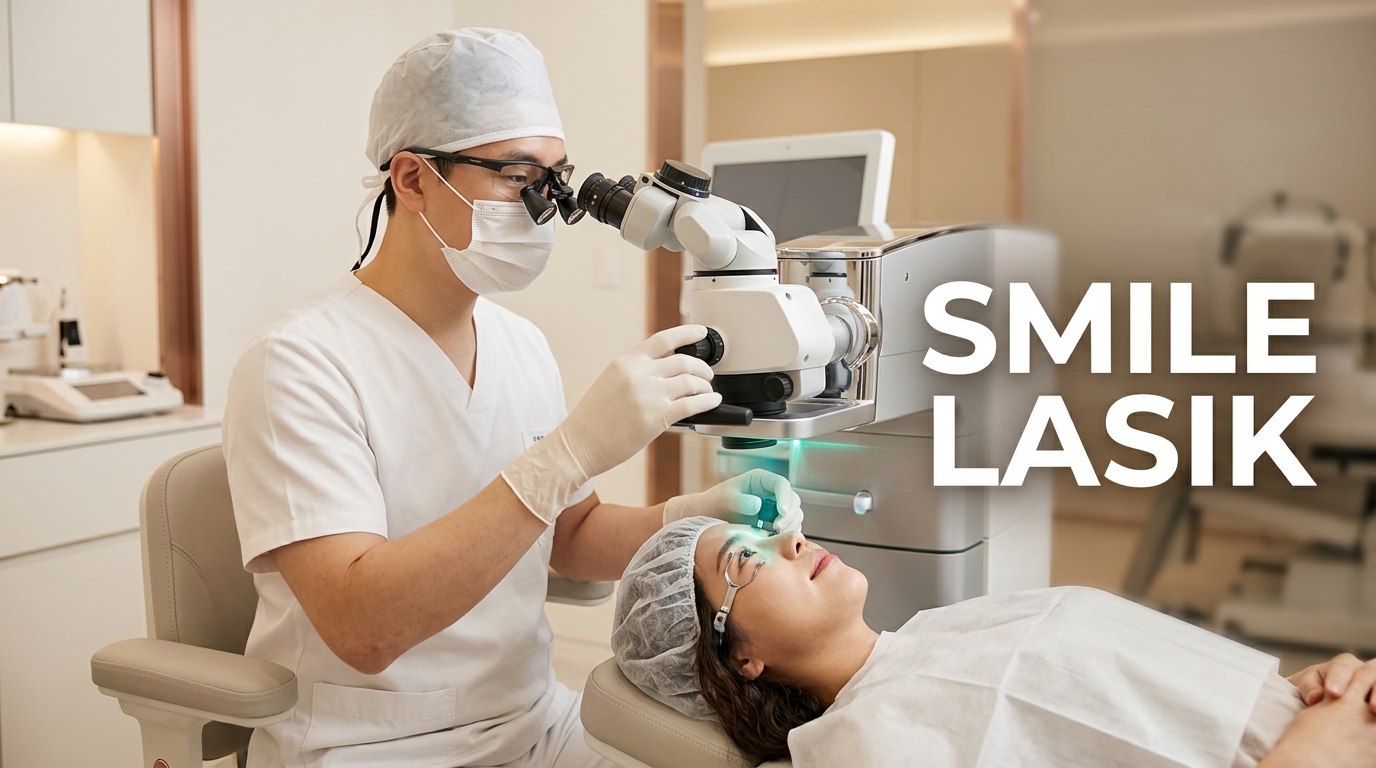
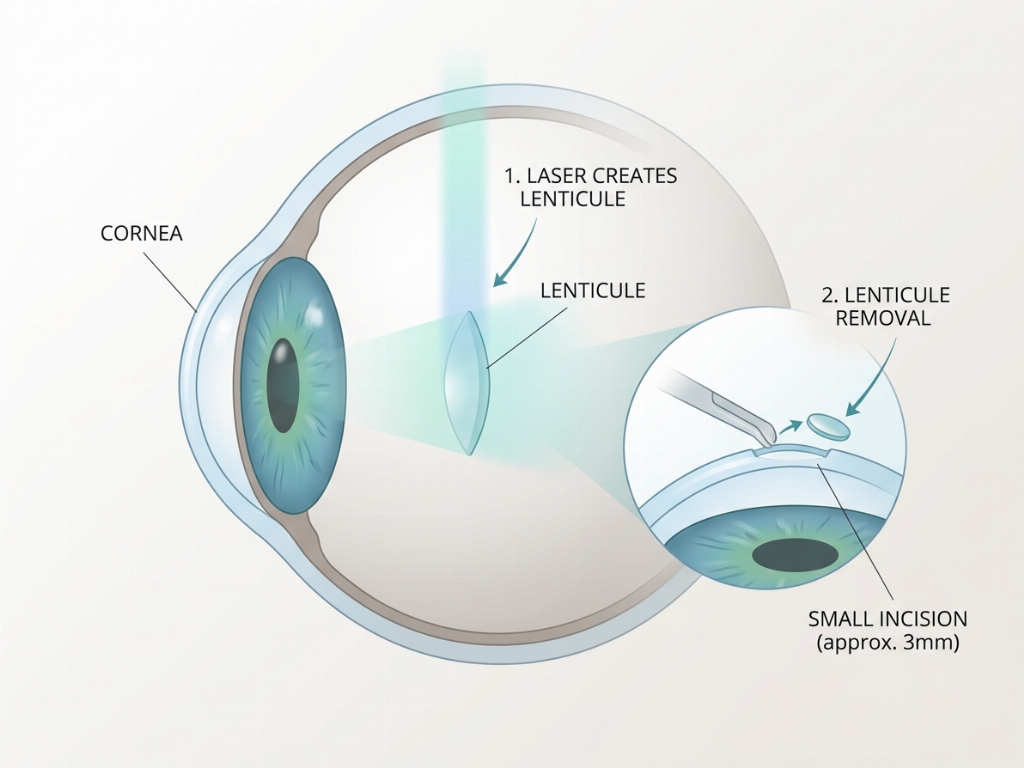
SMILE LASIK, or Small Incision Lenticule Extraction, represents the latest generation of laser vision correction. Unlike traditional LASIK, which requires creating a large circular flap on the corneal surface, SMILE uses a femtosecond laser to create a thin, lens-shaped piece of tissue (lenticule) within the intact cornea. This lenticule is then removed through a microscopic incision measuring less than 4mm.
Because the procedure is minimally invasive, it preserves more of the corneal nerve fibers and structural integrity. This significantly reduces the incidence of post-operative dry eye and eliminates the risk of flap-related complications, such as displacement or epithelial ingrowth, making it a preferred choice for active individuals and athletes.
Expected Results
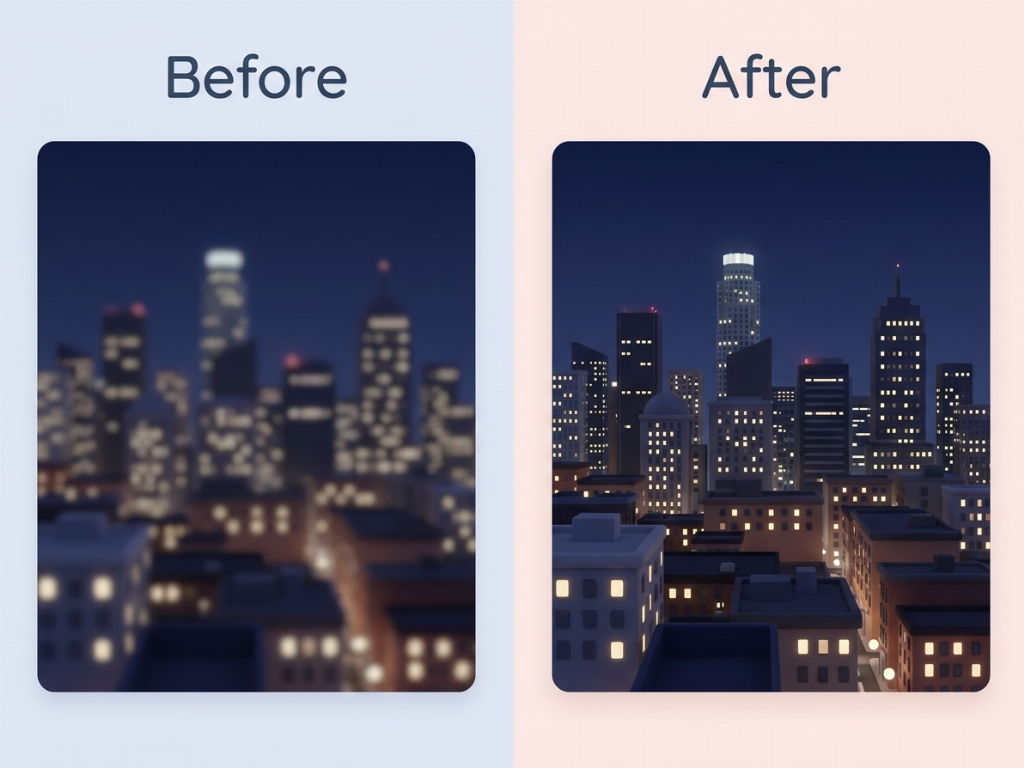
The primary goal of SMILE is to achieve functional vision, often 20/20 or better, depending on the individual's baseline eye health and refractive error. Most patients notice a significant improvement in clarity within 24 hours, though vision may continue to sharpen over several weeks as the cornea heals completely.
While SMILE is highly effective for correcting nearsightedness (myopia) and astigmatism, it is important to have realistic expectations. Some patients may still require reading glasses later in life due to natural age-related changes (presbyopia), and a small percentage may require a secondary enhancement procedure if the initial correction does not reach the desired target.
Why Korea & Cost
South Korea is a global leader in refractive surgery, with Seoul clinics often performing some of the highest volumes of SMILE procedures worldwide. Korean ophthalmologists are known for their extensive clinical data and use of the latest Zeiss VisuMax laser technology. Many centers offer comprehensive English-language support and advanced diagnostic suites that map the eye's unique topography before surgery.
The cost of SMILE in Korea is influenced by the surgeon's experience, the specific laser technology used, and the inclusion of post-operative medications or follow-up visits. While generally more expensive than surface-based treatments like PRK due to the advanced technology required, a personal consultation provides an exact quote based on your specific ocular measurements.
Recovery & Aftercare
Recovery from SMILE is notably rapid. Most patients experience mild grittiness or watering for a few hours immediately following the procedure, but these sensations typically subside by the next morning. While many patients can return to work or light activities the following day, driving should only be resumed once a surgeon confirms your vision meets legal requirements at the mandatory day-one follow-up appointment.
Aftercare involves a strict regimen of antibiotic and anti-inflammatory eye drops to prevent infection and manage swelling. Patients are advised to avoid swimming, heavy eye makeup, and rubbing their eyes for at least one week. Because the incision is so small, the physical restrictions are generally shorter than those for traditional LASIK or LASEK.
Who Is It For?
- Individuals with myopia or nearsightedness
- Patients with mild to moderate astigmatism
- Those with active lifestyles or contact sports interests
- Patients concerned about post-operative dry eye
- Adults with stable vision for at least one year
- Candidates with sufficient corneal thickness
Benefits
- Eliminates flap-related complications as no flap is created
- Minimally invasive with a tiny 2-4mm incision
- Reduced risk of chronic dry eye symptoms
- Highly consistent visual outcomes for myopia
- Faster physical recovery compared to traditional LASIK
- Greater preservation of corneal structural integrity
How It's Done
- Numbing drops are applied to the eye surface
- Femtosecond laser creates a precise internal lenticule
- Laser creates a microscopic 2-4mm keyhole incision
- Surgeon manually removes the lenticule through the incision
- The cornea is reshaped by the removal of the tissue
- The incision heals naturally without the need for stitches
Risks & Side Effects
- Temporary blurred or hazy vision during healing
- Over-correction or under-correction of vision
- Night vision symptoms like halos or glare
- Transient dry eye sensations
- Small risk of corneal infection or inflammation
- Incomplete lenticule extraction requiring conversion
Recovery
- Initial rest for 4-6 hours post-procedure
- Vision typically stabilizes within 24 to 48 hours
- Day-1 follow-up to verify visual acuity
- Most patients return to work within 1-2 days
- Avoid dusty environments for the first week
- Full stabilization can take up to 3 months
Aftercare
- Use prescribed antibiotic and steroid drops as directed
- Apply preservative-free artificial tears frequently
- Wear UV-protective sunglasses when outdoors
- Avoid rubbing or applying pressure to the eyes
- Skip eye makeup and eyeliner for one week
- Attend all scheduled post-operative examinations
Precautions
- Do not drive until cleared by your ophthalmologist
- Avoid swimming and saunas for at least two weeks
- Limit screen time for the first 24 hours to reduce strain
- Inform the surgeon of any sudden pain or vision loss
- Avoid vigorous contact sports for one week
- Ensure hands are washed before applying eye drops
| Duration | 15-60 min |
|---|---|
| Recovery | 1-7 days |
| Anesthesia | Topical anesthesia |
| Price Range | approx. $1,110 – $2,220 (based on ₩1,500,000–₩3,000,000) |






 Clinic Introduction
 Medical Facility
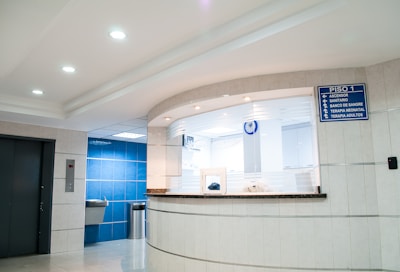 Patient Care
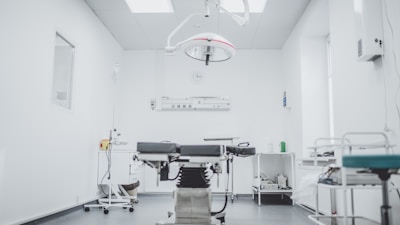 Consultation Room
 Medical Staff
 Recovery Suite
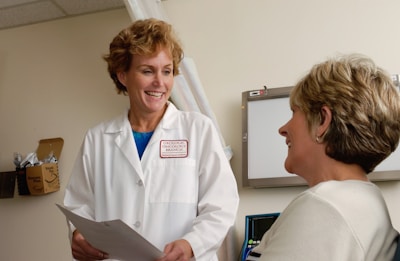 Treatment Room