Teeth Whitening
Overview
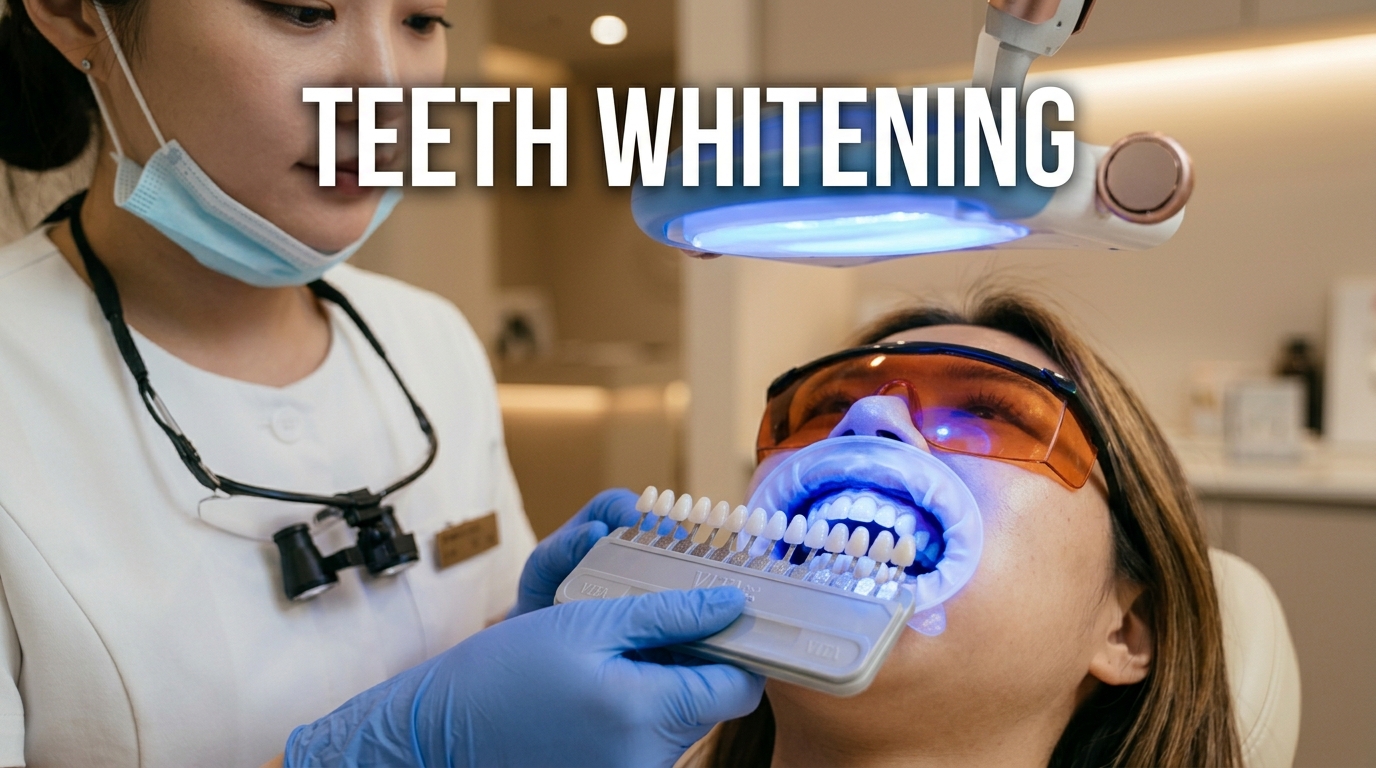
Professional teeth whitening, often referred to in clinical marketing as 'power whitening,' is a non-invasive dental procedure designed to lighten the color of natural tooth enamel. Unlike over-the-counter strips, clinical whitening utilizes high-concentration hydrogen peroxide or carbamide peroxide gels that are activated by specialized LED or plasma arc lights to accelerate the oxidation of organic stains.
The process focuses on removing extrinsic stains caused by food, beverages, and tobacco, as well as certain intrinsic discolorations within the tooth structure. Because the bleaching agents are potent, the procedure is performed with protective barriers for the gums and soft tissues to prevent chemical irritation.
Expected Results
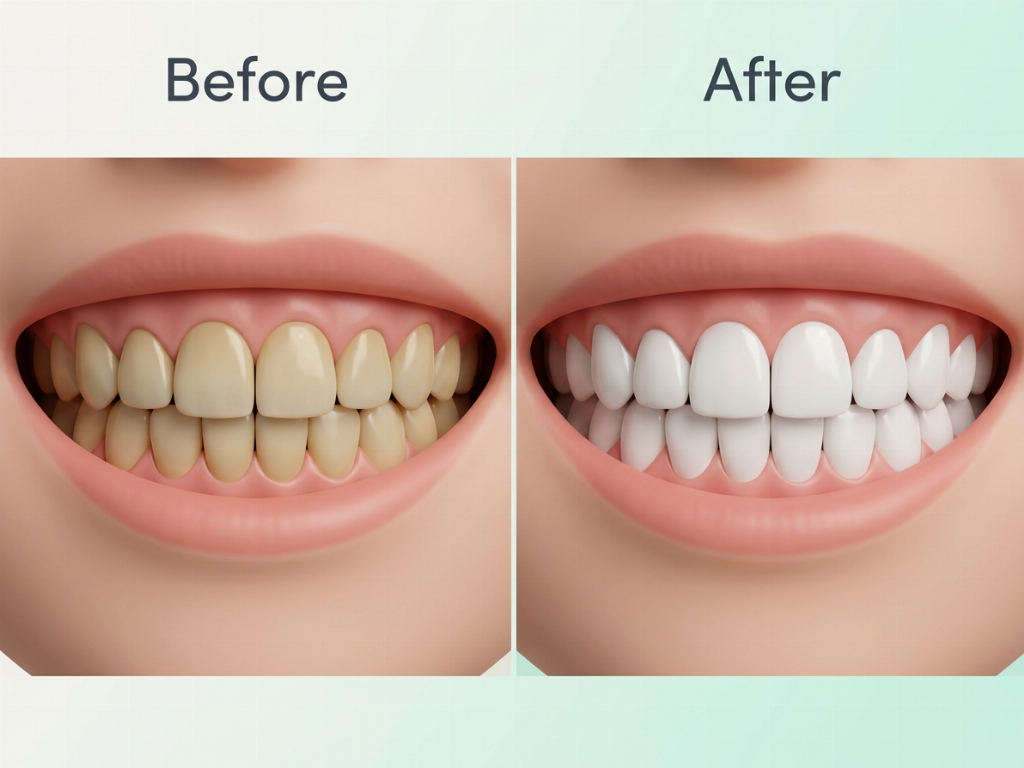
The primary goal of professional whitening is to achieve a natural-looking brightness that complements the patient's facial features. Most patients observe a change of several shades on a standard dental shade guide. However, results are highly individual and depend on the starting shade of the teeth and the nature of the staining.
It is important to note that whitening treatments only affect natural tooth enamel. Existing dental work such as porcelain crowns, veneers, or composite fillings will not change color, which may necessitate replacing old restorations after the whitening process to ensure a uniform appearance.
Why Korea & Cost
South Korea offers advanced dental technology and highly modern clinics that prioritize patient comfort and safety. Many dental centers in Seoul specialize in international patient care, providing English-speaking staff and transparent consultation processes. Korean dental clinics often utilize the latest light-activation systems designed to minimize the 'zinging' sensations sometimes associated with high-concentration bleaching.
The cost of teeth whitening in Korea varies based on the concentration of the whitening agent used, the number of cycles performed in a single session, and whether a customized take-home maintenance kit is included. A consultation with a dental professional will provide an exact quote based on your specific dental health and aesthetic goals.
Recovery & Aftercare
Recovery is generally immediate, though many patients experience temporary tooth sensitivity to hot or cold temperatures for 24 to 48 hours. During this time, the enamel is slightly more porous, making the teeth more susceptible to new stains. Following a 'white diet'—avoiding dark-colored foods and drinks—is essential during the first few days to lock in the results.
Long-term maintenance involves routine professional cleanings and good oral hygiene. While the brightening effect is long-lasting, it is not permanent; lifestyle habits like coffee consumption or smoking will eventually lead to gradual restaining, which can be managed with periodic touch-up treatments.
Who Is It For?
- Individuals with yellow or brown surface staining from coffee, tea, or wine
- Patients with healthy teeth and gums looking for a brighter smile
- Those with realistic expectations regarding natural tooth shade limits
- Individuals who have completed necessary dental cleanings and fillings
- Patients without significant tooth sensitivity or thin enamel
Benefits
- Visible brightening in a single 60-minute session
- Removal of deep-set stains that brushing cannot reach
- Supervised clinical application to protect gum health
- Customized treatment intensity based on patient sensitivity
- Non-invasive alternative to veneers for color correction
How It's Done
- Professional cleaning to remove surface plaque and debris
- Application of a protective resin barrier to the gums
- Coating the teeth with a high-concentration bleaching gel
- Activation of the gel using a specialized LED or plasma light
- Rinsing and re-application of gel for multiple 15-minute cycles
- Final fluoride treatment to strengthen enamel and reduce sensitivity
Risks & Side Effects
- Temporary tooth sensitivity to temperature changes
- Minor gum irritation or chemical 'blanching' from the gel
- Uneven results if the patient has existing dental restorations
- Enamel thinning or permanent sensitivity from improper high-concentration use
- Over-whitening leading to a chalky or translucent appearance
Recovery
- Sensitivity typically peaks within 24 hours and fades quickly
- No downtime required; patients can return to work immediately
- Enamel pores remain open for approximately 48 hours
- Minor gum discomfort usually resolves within 1 to 2 days
- Final shade stability is reached about one week post-treatment
Aftercare
- Follow a 'white diet' (no coffee, red wine, or soy sauce) for 48 hours
- Use a desensitizing toothpaste if temperature sensitivity occurs
- Rinse with water immediately after consuming staining substances
- Maintain regular 6-month professional dental cleanings
- Avoid extremely hot or cold beverages for the first 24 hours
Precautions
- Postponement for pregnant or breastfeeding women due to limited clinical data
- Not recommended for children or adolescents with developing pulp
- Consultation required for patients with receding gums or exposed roots
- Avoid whitening if you have untreated cavities or gum disease
- Inform the dentist of any history of severe tooth sensitivity
| Duration | 30-120 min |
|---|---|
| Recovery | 1-14 days |
| Anesthesia | No anesthesia |
| Price Range | approx. $70 – $370 (based on ₩100,000–₩500,000) |



 Clinic Introduction
 Medical Facility
 Patient Care
 Consultation Room
 Medical Staff
 Recovery Suite
 Treatment Room