Wisdom Tooth Extraction
Overview
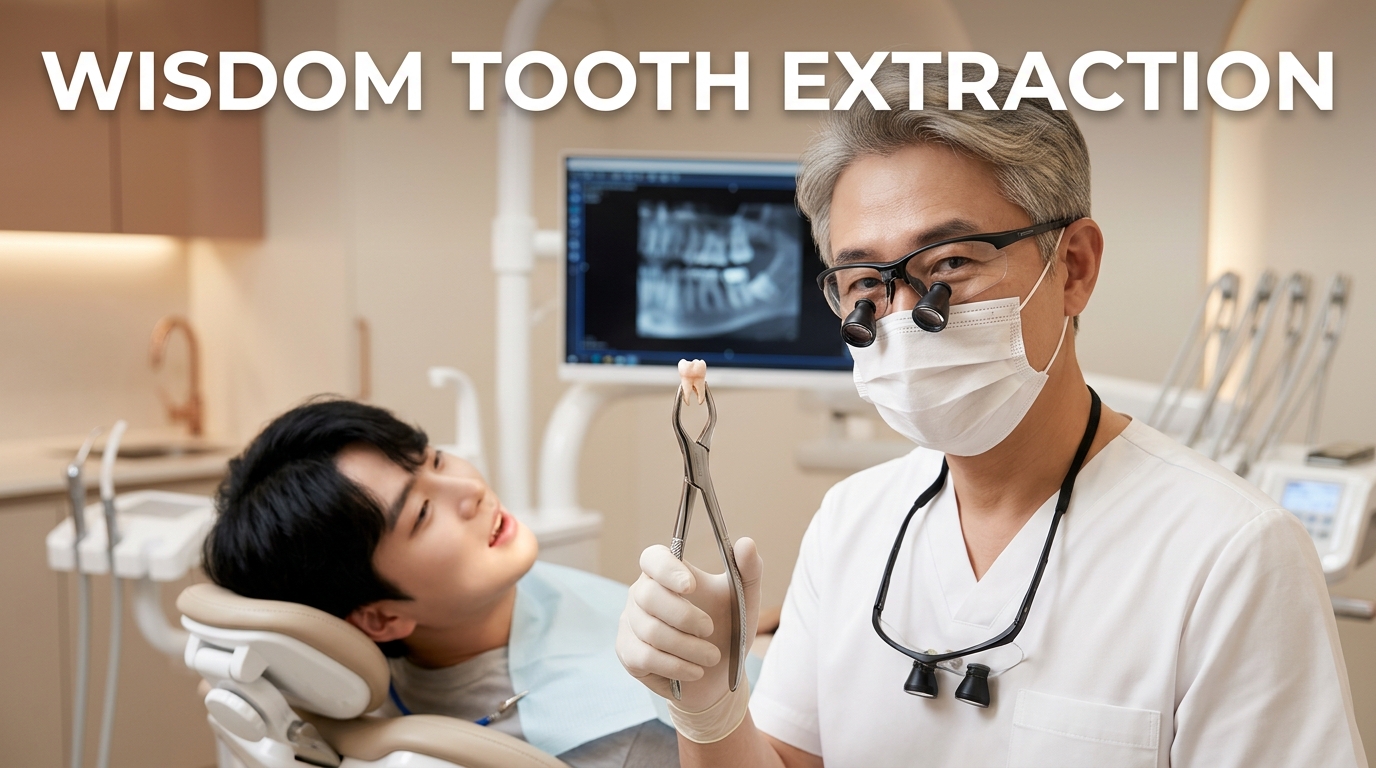
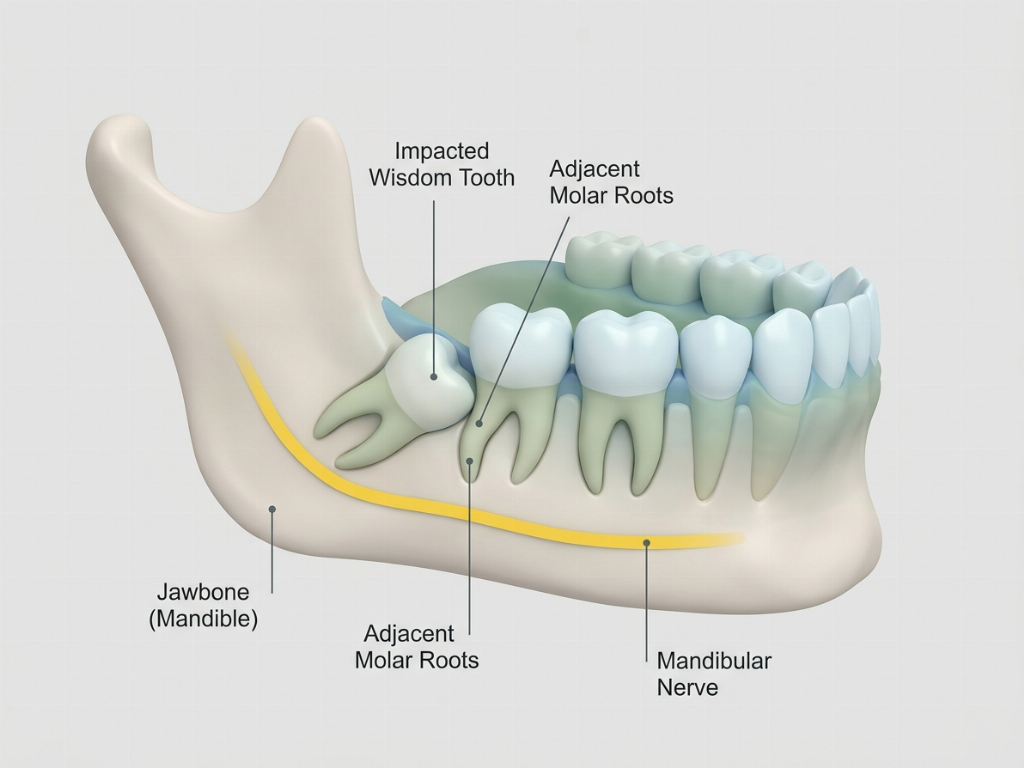
Wisdom tooth extraction is the surgical removal of the third molars, which are the last set of teeth to emerge in the back of the mouth. Because these teeth often lack sufficient space to erupt properly, they can become impacted—trapped beneath the gum line or bone—leading to significant dental complications.
The procedure varies in complexity depending on the tooth's position. A simple extraction is performed on fully erupted teeth, while a surgical extraction is required for teeth that are partially or fully buried. In South Korea, oral surgeons utilize advanced 3D CT imaging to map the proximity of tooth roots to major nerves, ensuring a precise and safe removal process.
Expected Results
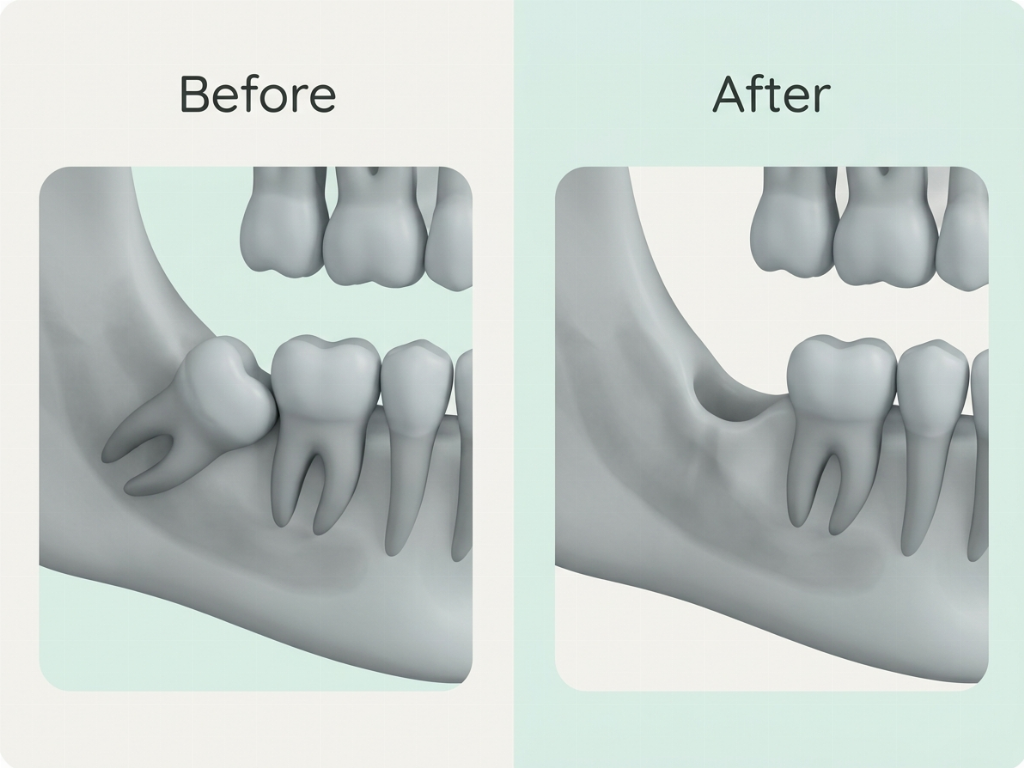
The primary goal of the procedure is the resolution of pain and the prevention of future oral health issues. By removing problematic wisdom teeth, patients can expect relief from localized swelling, jaw stiffness, and the 'pushing' sensation often felt when teeth are crowded. It also eliminates the risk of pericoronitis, a common infection of the gum tissue surrounding a partially erupted tooth.
Long-term, the extraction protects the alignment of existing teeth and prevents the formation of cysts or damage to the roots of adjacent second molars. While the extraction site leaves a temporary gap, the gum tissue heals over the socket within a few weeks, and the underlying bone eventually fills in the space.
Why Korea & Cost
South Korea is a global leader in dental technology, with clinics equipped with high-resolution 3D Cone Beam CT (CBCT) scanners as a standard. This technology allows surgeons to visualize the exact path of the mandibular nerve, significantly reducing the risk of sensory complications. Many Korean dental surgeons are dual-qualified in oral and maxillofacial surgery, specializing in complex impactions that require delicate bone work.
The cost of wisdom tooth extraction in Korea is determined by the number of teeth being removed, the degree of impaction (horizontal, vertical, or bony), and the type of anesthesia used. International patients often find that even with high-end diagnostic imaging and sedation options, the total investment is highly competitive compared to many Western countries. A digital consultation with X-ray review is necessary for an accurate quote.
Recovery & Aftercare
Initial recovery focuses on the formation of a blood clot in the extraction socket, which is vital for healing. Patients typically experience swelling and mild bruising for the first 3 to 5 days. During this time, a soft-food diet and cold compresses are essential to manage discomfort and minimize inflammation.
Complete soft tissue healing usually takes about two weeks, while the bone can take several months to fully remodel. Following the surgeon's instructions regarding oral hygiene—such as avoiding vigorous rinsing or using straws—is critical to prevent dry socket, a painful condition where the protective clot is dislodged prematurely.
Who Is It For?
- Patients with impacted wisdom teeth causing pain or swelling
- Individuals experiencing crowding or shifting of front teeth
- Those with recurring gum infections at the back of the jaw
- Patients with deep decay in molars that cannot be restored
- Individuals whose wisdom teeth are damaging adjacent tooth roots
Benefits
- Prevents future orthodontic relapse and tooth crowding
- Eliminates chronic pain and jaw discomfort
- Reduces the risk of oral infections and abscesses
- Prevents damage to the roots of healthy second molars
- Avoids the formation of cysts or tumors in the jawbone
How It's Done
- 3D CT scanning to locate tooth roots and nerves
- Administration of local anesthesia or IV sedation
- Incision of the gum tissue to expose the tooth and bone
- Sectioning the tooth into smaller pieces for easier removal
- Cleaning the socket and suturing the gum tissue closed
Risks & Side Effects
- Dry socket (loss of blood clot)
- Temporary or permanent nerve numbness in the lip or chin
- Post-operative infection at the extraction site
- Sinus communication (for upper tooth extractions)
- Temporary jaw stiffness or limited opening
Recovery
- Bite on gauze for 60-90 minutes immediately after surgery
- Apply ice packs to the cheeks for the first 48 hours
- Stick to a liquid or very soft diet for the first 3 days
- Avoid strenuous physical activity for at least one week
- Swelling typically peaks on day 3 and subsides by day 7
Aftercare
- Do not use a straw or spit forcefully to protect the clot
- Gently rinse with warm salt water starting 24 hours after surgery
- Brush other teeth carefully, avoiding the surgical site
- Take prescribed antibiotics and pain relievers as directed
- Avoid smoking and alcohol for at least 7 to 14 days
Precautions
- Disclose all medications and blood thinners during consultation
- Arrange for a guardian if undergoing IV sedation
- Avoid hot or spicy foods that may irritate the wound
- Report any persistent numbness or fever to the clinic immediately
- Do not poke the extraction site with your tongue or fingers
| Duration | 90-240 min |
|---|---|
| Recovery | 14-28 days |
| Anesthesia | Varies — consult clinic |
| Price Range | Consultation required |


 Clinic Introduction
 Medical Facility
 Patient Care
 Consultation Room
 Medical Staff
 Recovery Suite
 Treatment Room